Screws
Set Screws / Grub Screws Manufacturer, Wholesaler, Supplier & Exporter
Set screws (grub screws) thread fully into a component and bear directly on a shaft or mating part to prevent rotation or slippage, commonly in pulleys, collars, and gears. We manufacture and export these to DIN 913–916 in alloy and stainless steel.
Set screws (grub screws) do their job entirely below the surface of the component they're threaded into, which means the point geometry — not the thread — is what actually determines how well they hold a shaft in place. Buyers who order 'set screws' without specifying point type are leaving the single most important performance decision to whoever fills the order.
Cup point is the practical default for a reason: the small circular ridge it leaves indents the shaft slightly, giving genuinely repeatable holding power across removal and reinstallation cycles that a flat point can't match. Cone point holds harder for a one-time, permanent installation, at the cost of marking the shaft more deeply — which matters if the shaft ever needs to be reused elsewhere.
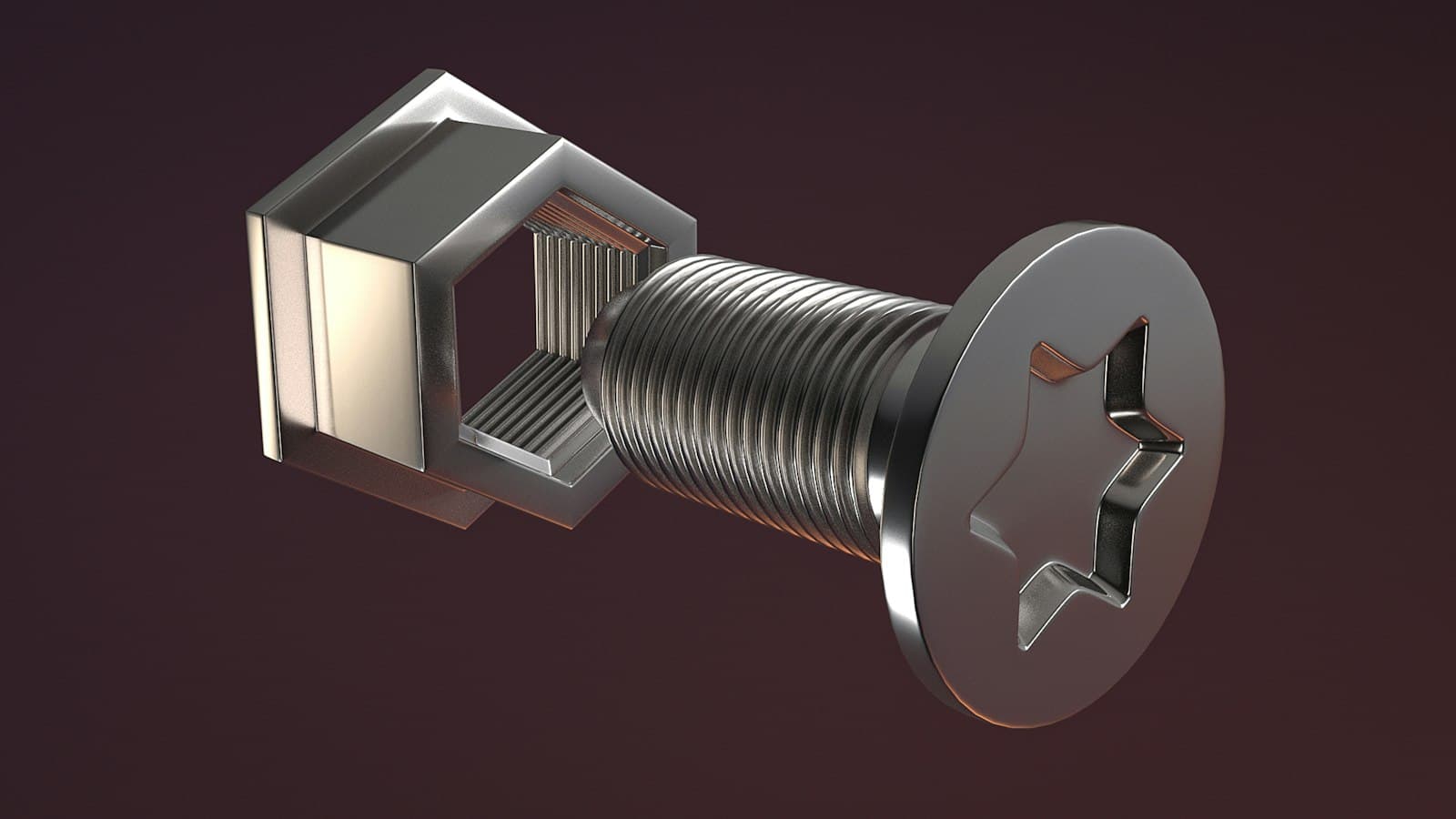
Minimum Order — Container Quantity (Approx.)
A standard 20ft container (~20 tons) typically holds 3-5 million pieces of set screws in common sizes (M6-M8). Exact quantity depends on size and point type and is confirmed at quote time.
You don't need a full container to order. Hurain Engitech & Trade — the group Global Fasteners Exports operates under — regularly ships smaller, partial-container (LCL) orders of just a few pallets or boxes for buyers who don't yet need FCL volume, consolidated with other cargo to keep freight cost reasonable.
Specifications
Standards
DIN 913 (flat point), DIN 914 (cone point), DIN 915 (dog point), DIN 916 (cup point), ISO 4026–4029.
Size range
M2 to M30 metric.
Grades
Alloy steel 45H, stainless steel A2/A4.
Drive
Hex socket (Allen) drive as standard.
Applications
Pulleys & collars
Shaft collars and pulley hubs requiring positive shaft locking.
Gears & couplings
Locking gears and couplings onto shafts.
Machine tool fixtures
Fine positioning and locking in jigs and fixtures.
Materials Available
Steel
Corrosion-resistant
Point geometry and hardness verified against the relevant DIN standard for reliable shaft-locking performance.
How We Manufacture & Export This Product
- 1
Spec confirmation
Confirm point type (cup, cone, flat, dog) and size.
- 2
Machining/forming
Cold heading with socket broaching and point forming.
- 3
Heat treatment
Hardening for cup and cone-point wear resistance.
- 4
Export packing
Small-parts bulk packing suited to OEM assembly lines.
Export Track Record
Supplied to power-transmission component manufacturers and machinery OEMs.
Real-World Use Cases
Shaft collars and pulley hubs
Cup-point set screws providing repeatable, removable shaft locking.
Permanent gear and coupling assembly
Cone-point set screws for higher-holding-power, less frequently disassembled joints.
Fine positioning in jigs and fixtures
Flat-point set screws bearing against a finished or hardened shaft surface without marking it.
Common Mistakes Buyers Make
Not specifying point type
Point geometry, not thread size, is the main performance variable — cup, cone, and flat points behave very differently under the same torque.
Using cone point on a shaft that needs to be reused
Cone points mark the shaft permanently and deeply — cup point is the better choice where the shaft may later be relocated.
Under-torquing a set screw on a vibrating shaft
Set screws rely entirely on point-to-shaft friction and indentation — insufficient torque is the most common cause of slippage in service.
Glossary of Terms
- Cup point
- A set screw tip with a small circular ridge that indents the shaft for repeatable, removable holding power.
- Cone point
- A pointed set screw tip that digs deeply into the shaft for maximum, largely permanent holding power.
- Flat point
- A set screw tip that bears flat against the shaft without marking it, suited to finished or hardened surfaces.
Quality Inspection We Perform
Dimensional inspection
Thread gauge, length, diameter, and head/drive geometry checked against the specified standard.
Material verification
Grade and material composition confirmed against the order specification, with mill test certificates on request.
Mechanical testing
Tensile strength, hardness, and proof-load testing on sample batches, particularly for structural and high-tensile grades.
Finish & coating check
Plating thickness, galvanizing coverage, or passivation quality inspected before packing.
HS Code & Customs Classification
Most fasteners fall under HS Chapter 73 (articles of iron or steel) or Chapter 74/76 for brass and aluminum items — the exact 8-10 digit subheading depends on the specific product and material. We include the HS code on the commercial invoice; confirm the applicable import duty with your customs broker, since rates vary by country and trade agreement.
Packaging & Export Labeling
Export packing is chosen to survive ocean freight and container loading without corrosion or damage: corrosion-protected paper or oil coating where needed, then cartons, drums, or bulk bags, palletized or crated for the container. We can match specific labeling, barcoding, or carton-marking requirements for OEM and repeat buyers.
Countries We Export Set Screws / Grub Screws To
View all markets →Buying guide
How to Choose a Reliable Set Screws / Grub Screws Manufacturer, Wholesaler, Supplier & ExporterWhy point geometry, not thread size, is the real spec that determines set screw performance — and how to get a supplier to ask the right questions.
Frequently Asked Questions
Related Products
Ready to order Set Screws / Grub Screws?
Send your quantities, grade, standard, and destination port for a quote.